published fishing article/column Samples
"Scratch the Hatch"
"Scratch the Hatch"
"Scratch the Hatch"

Originally published, April 2021, Bassmaster magazine.
"Love Bites"
"Scratch the Hatch"
"Scratch the Hatch"

Humor column, Trailer, Spring 2021, Kayak Angler
"Gravy Boat"
"Scratch the Hatch"
"A Matter of Inches"

Kayak Angler, Trailer, Summer 2021,
Feature illustration: Lorenzo del Bianco
"A Matter of Inches"
"A Matter of Inches"

Humor column, Trailer, Fall 2021, Kayak Angler
"Old Dog, New Tricks"

Kayak Angler, Trailer, Summer 2025,
Feature illustration: Lorenzo del Bianco
"Slams"

Kayak Angler, Trailer, Summer 2024,
Feature illustration: Lorenzo del Bianco
"Lost in the Weeds"
"Unorthodox Methods"

Kayak Angler, Trailer, Spring 2025,
Feature illustration: Lorenzo del Bianco
"Unorthodox Methods"
"Unorthodox Methods"

Kayak Angler, Trailer, Spring 2024,
Feature illustration: Lorenzo del Bianco
"Puppet Master"

Kayak Angler, Trailer, Summer 2023,
Feature illustration: Lorenzo del Bianco
"Fish Bites"

Kayak Angler, Trailer, (checking date),
Feature illustration: Lorenzo del Bianco
"Recycled Christmas Trees"
"Recycled Christmas Trees"

Kayak Angler, Trailer, Fall 2022,
Feature illustration: Lorenzo del Bianco
"Getting Boulder"
"Recycled Christmas Trees"

Kayak Angler, Trailer, Summer 2022,
Feature illustration: Lorenzo del Bianco
Blog posts
Going Green (www.espnoutdoors.com)
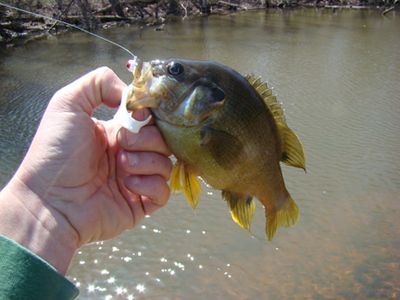
At the risk of sounding like I am jumping on the latest eco-fad bandwagon, I am pro-green… sunfish.
Not that I am anti-bluegill, but the green sunfish, Lepomis cyanellus, is an over-looked, underappreciated sport fish. Always cooperative, always hungry, this thick sunfish will smash lures bluegill shy away from. It may not be the largest sunfish, but it does have one of the largest mouths.
One can even accomplish a version of “bass thumb” from an afternoon of lipping green sunfish with a thumb. Oddly, when I mention that I have a “green thumb” at dinner parties, someone suddenly switches topics and starts questioning me about soil amendments.
The only finger one might insert in the mouth of an average bluegill is a pinky… and that’s just really weird. According to my calculations, a bluegill would have to be 3 feet long and weigh around 27 pounds before you could lift one by thumb.
When hooked, a bluegill uses its dish shape and turns 90 degrees to the line angle. With resistance maximized, it turns in tight, vibrating circles. It’s all he’s got. The result is some vaudevillian hand trembling finale.
Green sunfish still won’t make your reel scream, but they are a hoot on a fly rod and you can feel a determined head-shake as they power this way and that. No need to “match the hatch” like with finicky trout; green sunfish have more of a “match this!” attitude. There have been numerous occasions when I’ve had to work to find something in the tackle box they would not hit.
And don’t forget the colors. That fringe of yellow/orange on the fins contrasting with the dark olive body and the blue striped operculum… almost as exotic as a peacock bass. I’ve always thought bluegill were misnamed and disappointingly pale in color, except during spawn.
Another quality of green sunfish that I admire is that they are survivors.
“But that tiny pond on the top of the hill has never been stocked.”
Uh-huh. Now, step aside because I’m going to go catch a spunky pint-sized green sunfish.
During heavy rain events, they power upstream in the tiniest trickle through fields, up hills, eventually landing in some unconquered water hole. Once there, they are capable of withstanding extreme conditions in turbidity, temperature, and dissolved oxygen to rival even the freakish bullhead.
You don’t really set out to create green sunfish habitat; it will find you. As ponds age, they become more and more shallow as erosion carries soil particles downstream. In its golden years, a small pond may only be able to support green sunfish. Until your bank account can accommodate bulldozer rental, just enjoy this dwindling gem of a fishing hole. Green sunfish are almost always biting. And, even if your kids let the bobber run a little too long, there is ample space for hook removal.
But, you probably will never see a recommended stocking rate for green sunfish. Largemouth bass are usually the goal in stocking programs and because green sunfish have such large mouths, they compete directly with young bass for prey items. Bluegills, with their tiny, geez-I-hope-I-can-get-the-hook-out mouths, are limited to smaller prey items and thus are a good compliment to most stocking recipes. And if you aren’t exactly sure of your sunfish identification skills, be advised that a little green sunfish can go a long ways. Like making a sandwich and thinking you are adding a dollop of mayo when it is actually horseradish.
Bluegill politely “kiss” insects off the pond surface on warm summer evenings; green sunfish give big uncomfortably sloppy strange Aunt smacks. The green sunfish is an admirably feisty fish, with the fundamental feature of a mouth large enough to provide a good, slightly thumb-scarring handle. If there were no bass, we’d all be watching “Green Sunfish Masters” on Saturday mornings.
Feeling Cranky (www.lurenet.com)
With the arrival of spring, a swim bait, a BOOYAH Single Colorado Blade spinnerbait, and a soft plastic lure like a YUM Lizard, will carry most of the work load at my usual shallow, weedy fishing locales. However, there are times when I’ve just got to throw a crankbait.
Although traditionally a staple for many anglers, crankbaits have quietly settled a little deeper into my bag of tricks. But they are always there and for good reason - they flat work. Even in highly pressured areas, local river anglers have a hard time keeping smallmouth bass off a Cotton Cordell Big O most of the year, while an always booked area fishing guide hammers them with lures like the CC Shallow Minnow.
When my initial, more finesse type presentations fail to get attention, I’ll use a crankbait to wake them up. I have read of other similarly positive feeding behavioral changes with fish after a brief disruption. For example, a beaver tail slap or an otter cruising downstream through a hole may awaken a pod of steelhead from a tight-lipped stupor once it departs. I also heard a professional tournament angler say he has been known occasionally to “do doughnuts” in his boat to fire up deep schools of fish. Sometimes having something so brazen and obnoxious announce itself with a rattle and go racing by fish, can turn out to be just the kick in the pants the fish need.
While that crankbait is doing its thing - digging around, bumping into things, waking everybody up - I’m taking mental note of the feedback. They are pretty consistent with their estimated diving depths, so it is possible to gain insight into what’s below, even without using electronics. How hard is the bottom and how uniform is it? How many weeds am I bringing back, and what kind or in what stage is this aquatic vegetation?
But frankly there are times when, during a frustrating lull in the action with my leading, safer, lure presentations, I just become overwhelmed with the need to feel something … anything, creating resistance at the end of my line while I chuck and wind. The crankbait never fails to provide even when the fish are not in the area. It plows through silt, deflecting off rocks like a deranged crayfish. Like an out-of-control NASCAR driver, it is smashing into guardrails. There is so much wobbly goodness, that even after detection of a bite, professional tournament anglers need to take a peek at the rod tip to make sure it is loaded up more than usual. Heck, just a tiny crankbait like a Rebel Tracdown Minnow on an ultralight rod in a swift trout stream is enough to put a stupid grin on my face.
Crankbaits, with their usual dual treble hook set up, may be more prone to snagging in some situations. And it sure stings a bit when, after exhausting all other options, I have to break one off that probably was the last of that color in the boat. But as John A. Shedd once said, “a ship in harbor is safe, but that is not what ships are built for.”

Stay or Go? (www.lurenet.com)
My kids currently are struggling through Shakespeare in school. Otherwise, the title might have been derived from the 1979 song by the Clash. Whatever the heading, “where to start casting” and “how long to remain there,” may be the two most important decisions you make on the water.
Fishing conditions are continually changing. Although the differences may seem subtle at the time, they can influence fish location and behavior significantly. The ability to choose correctly can make a huge difference. For example, during a past Bassmaster Classic, one angler remained in an area that was productive in practice but failed to weigh a single bass after two full days of fishing. However, another pro also never left a small area of one creek, but it ended up being a $500,000 winning decision.
Ice fishing season is in full swing in my area. One mistake I’ve made in previous years has been not moving enough. I now drill more holes to find that deep channel, vegetation edge, firmer bottom or submerged structure that is holding cooperative fish instead of waiting and expecting sluggish, grumpy cold fish eventually to swim beneath me. With a new hole, one technique to try is to rocket something like a Lindy Darter or Rattl’n Flyer Spoon down to get some attention, slamming it on the bottom to stir up silt for inquisitive species like yellow perch. If that doesn’t work, I’ll follow up with a temptingly baited Lindy Tungsten Ice Worm, barely making it tremble.
For water in a more liquid form, professionals attempt to process a multitude of variables and can go hours without a bite in one spot, believing that any minute the fish are going to turn on. They know that seasonally, and even daily, there are places where fish can be arriving, or reloading - such as spawning flats, the mouths of tributaries or rip-rap along dams. Committing to an area, especially in tournament situations, can help protect this spot from other fishermen. Also, there are times when staying anchored reduces the chances of disturbing spooky fish from boat activity.
Wind speed and direction can change dramatically throughout the day. A little chop seems to awaken even the most comatose chilly fish. An increase in temperature of a mere degree or two can flip a feeding switch. A shift of the sun angle can be significant too. Recently, my son and I seemingly experienced three completely different days during a single six-hour fishing trip. A frenzy occurred only during a 20-minute window when the sun finally appeared and gave our BOOYAH spinnerbaits the extra flash needed to trigger the shadow-lurking pike.
When impounded reservoirs release water downstream, the resulting current rings a dinner bell. Fish relocate to energy conserving holding stations behind points and boulders to wait for the food to come to them. Keen anglers also are constantly aware of the bait movements because if predators aren’t there now, they soon will be.
Sometimes it may seem like expert anglers just pick a spot and go with it. But don’t be fooled; they have chosen the location by processing the sum of their experiences. Some factor made them begin casting there. And the pudding proof could occur with a fish early. Or, that initial fish could be one of those statistical outlier fish that now has you pointed in the wrong direction. It is important to consider if you are ahead or behind fish transitions.
When you do “find ‘em,” it can’t last forever. Fish spook and leave or may just become tight lipped. Downsizing from large crankbaits such as a Bomber Fat A to a finesse plastic like a YUM Dinger can be fruitful. Other times, you just might need to leave and come back later. But for how long? Elite Bassmaster anglers’ answers vary. One thought 30 minutes usually is enough for a spot to rest but another pro’s return time might be anywhere from 10 minutes to 1 ½ hours. A third pro shared that an hour is a good length of a break but added that “you just have to feel it.”
"Groove" or "Rut?" (www.lurenet.com)
Like many anglers, I’ve made the full transition to my late fall lure selection for the remaining open water season. Following my traditional seasonal path, I’ve proceeded through a series of lure types, designs, and colors deemed appropriate for the conditions, with water temperature playing a big part. Bassmaster magazine used to run a little reoccurring graphic showing “cast this/not this” for the time of year. I found their progression of lure recommendations and reasoning fairly consistent and would, at least for a moment, take it under consideration. Their suggestions didn’t always align completely with my current rotation but for the most part, we seemed to be on the same page.
For example, starting in the spring, my son and I will cover a lot of water with a white BOOYAH spinnerbait, either tandem or just a single Colorado blade. There is a slight summer decline of use. With warmer water, we traditionally switch to a deeper soft plastic bite in most of our destinations. Bass simply have a hard time ignoring something like a YUM Lizard during summer. Then with cooler fall temperatures, we’ll pick up the spinnerbaits again and really start pounding shallow reaches once more.
At some unknown point, perhaps triggered by our degree of finger numbness, the spinnerbait falls out of the lineup and lipless crankbaits suddenly start getting major minutes. Even though I have watched other anglers catch fish with these lures throughout the year, my Cotton Cordell Super Spot and Gay Blades stubbornly remain in the tackle box until cold water. But ever since I watched Kevin VanDam at a Bassmaster Classic put on a show with a lipless crankbait in water that was iced over the previous day, these lures have been a staple of my “go-to” cold water attack. By ripping a lipless crankbait surprisingly fast and letting it flutter down dangerously close to the top of grass, cold bass action usually keeps me warm.
When the water gets really cold, I switch to a jerkbait such as a Smithwick Rogue, with frustratingly long pauses. As Mark Zona once shared about coldwater jerkbait fishing, “text somebody” between a series of jerks. Often, because it has been so long since the last time I worked a jerkbait, I’ll try to find a small open water pond to gain my confidence again, before heading to any frigid lake.
Based on prior experience, I’ve become fairly confident with lure selection through the seasons. But, every now and then, I’ll have a surprisingly quiet outing that has me wondering if I’m too set in my ways. Many years ago, I threw lipless crankbaits and jerkbaits all year and recall being so successful that I wonder why I ever put them down. When I watch other anglers use my “cold water lures” to catch fish in warm water, again I give it a try. However, with confidence lacking, I don’t stick with it long enough and soon revert back to my old bag of tricks.
Although I may be blissfully happy catching fish in my coldwater groove, to push myself as an angler and increase my success rates, I may have to leave some of my warm water crutch lures in the garage to rediscover my one-time confidence lures.


Archived from www.takemefishing.org.
Uh-oh... looks like their website is down!
529. Buy Your License Now
528. Layering
527. Early Spring Species
525. Kids and Fisheries Conservation
523. Local Fisheries Management
522. Seattle Boat Show
521. Winter Shore Cleanup
520. Where the heck is Hells Canyon?
519. Seasickness
518. Lead Free Weights
517. Fall Fishing the West Coast
516. Fall Surf Fishing
515. Boating and Electrical Power Needs
514. Hybrid boats
513. Fishing Mentally
511. Hood River
510. Electric Reels
508. Snake River Guides
507. Muskie tips
503. Spring Texas Fishing tips
501. Fishing Knots for California
500. Health Benefits of Fishing in January
498. Holiday Boating Wish List
497. Fall Boating Safety
496. National Hunting and Fishing Month: October
495. The Best Fall Fishing Trips
494. Wake boarding?
493. Pier Fishing Tips
492. Affordable Boat Gear
490. Best Boating Lakes
489. Fishing and Camping
488. West Coast Spring Fishing
487. Fly Fishing in May
486. Boat Rental tips
485. Where to Get a Fishing License
484. How to tie a boat to a dock
483. Getting Boat-Ready
481. The Slam
480. Winter Boat Battery Storage
478. Shrinkage
477. Winter Boat Storage at Home
476. Buying a Used Boat
475. Sell a Boat Fast
474. Three Reasons to Learn Fly Fishing
473. Basic Fly Fishing Equipment
472. Boat Insurance
471. How Long to Get Boat License
470. Deep Sea Fishing
469. Solar Panels
468. Culling Fish
467. Tournament Fishing
466. Smallest Ocean Fishing Boat
462. Bass Lures
460. Boat Safety Courses
458. Essential Ice Fishing Stuff
457. California Aqueduct Fishing
456. Ice Fishing Resorts
455. Ice Fishing Spots by Species
454. Ice Fishing for Bluegills
453. Advanced Fly Fishing Tips
452. Drone Fishing?
451. Pond Fishing Boats
448. Saltwater Reels
447. Pontoon Boats
445. Spillway Fishing
444. Conesus Lake
443. S.A.F.E. Boating
442. Bladed Jigs
441. Boating and Weather Forecasts
440. Boat Kill Switches
439. Anchors
438. Texas Tilapia
437. Texas Crappie
435. Spring Boat Prep
434. Ice Fishing for Yellow Perch
432. The Inline Ice Fishing Reel
431. Ice Fishing Ponds
430. How to Choose Freshwater Lures
429. Don't Flounder for Flounder
428. Fishing for Trout from Lake Shore
426. Working the Jerkbait
425. Fly-fishing for bluegill in Fall
424. Missouri Trout
423. Summer Crappie Tips
422. 3 Reasons for Pond Fishing
421. 3 "C's" of the Family Canoe
420. Where to Find Bait
419. 5 Great Summer Activities for Kids
416. How to Store a Boat Outside
415. Fishing License Fees Help You Fish
414. Texas Jetty Fishing
413. Where to Buy a Boat
409. Ice Fishing at Night
407. Ice Fishing License?
406. Fly Fishing Basics
404. Making Lures
403. Freshwater Fly Fishing Reels
402. Gunwales?
401. Fishing Without a License?!
400. "Gunwales"
399. "Buoys"
398. "Mississippi River Boating"
397. "Casting a Dry Fly"
396. "Flyfishing in Illinois"
395. "Lifetime Fishing License"
394. "Soft Plastic Presentations"
393. "Split Grip Rods"
392. "Unique Fishing Gear"
391. "Do You Brake for Splake?"
390. "Fishing Opportunities for the Disabled"
389. "3 Reasons for NE Boating"
388. "Salmon Tips for Beginners"
387. "4 Species for Fish Farming"
386. "No Boat Title?"
385. "Smelt?!"
384. "5 Factors that could Change in New Fishing Regulations"
383. "Oregon Surf Fishing"
382. "A One Day Boating License"
381. "What is Needed to get a Fishing License"
380. "3 Examples of Fish Restoration in U.S."
379. "Red Snapper Factors"
378. "Ice Fishing for Brown Trout"
377. "Saltwater Rigs"
376. "Boat Insurance"
375. "Toccoa River Fly Fishing"
374. " Reporting Boating Accidents"
373. "Fish Contamination"
372. "Wonders of Wildlife Museum"
371. "Conservation Strategies"
370. "Boating Licenses"
369. "Aspects of Fish Conservation"
368. "Best Braid Knot"
367. "Recreational Saltwater Fishing"
366. "Boating License"
365. "Family Fishing Tips"
364. "Boat Safety for Kids"
363. "Where to Boat in Midwest"
362. "N. California"
361. "Tuna in San Diego"
360. "Beginning Fly Rod"
359. "Rock Fishing"
358. "Trout Spawn"
357. "Boat Safety"
356. "2018 Bassmaster Classic"
355. "Potomac"
354. "Bullhead"
353. "Bass Live Bait"
352. "Bottom Fishing Rigs"
351. "Chicago Fly Fishing"
350. "Boat Motor"
349. "Ice Fishing"
348. "Grouper"
347. "Folsom Lake"
(Somewhere below here, the links no longer work due to TMF website changes.)
346. "Fishing Conservation"
345. "Best Beginner Combos"
344. "Galveston Pier Fishing"
343. "Best Winter Catfish Bait"
342. "Austin Bass"
341. "Boat Inspection Checklist"
340. "3 Best Crappie Lures"
339. "Lake Tahoe"
338. "Fall Steelhead"
337. "Practical Ocean Conservation"
336. "Best Times for Catfish"
335. "Boat Safety Kit"
334. "Fall Bass"
333. "Trout Fishing Rigs"
332. "Shad Lures"
331. "Chesapeake Bay"
330. "Fish Identification Tips"
329. "Catching Croakers"
328. "Creek Fishing"
327. "Southern California Fishing"
326. "Hydrographic Charts"
325. "Move or Stay?"
324. "Ocean Kayak Fishing"
323. "Asian Carp Issues"
322. "Fishing in L.A."
321. "Fishing in Dallas"
320. "Fishing for Salmon in Oregon"
319. "Fishing Road Trip"
318. "Travel Fishing Kit"
317. "Colorado Fishing"
316. "2017 Best Places to Fish and Boat Contributors"
315. "California Boating Reminders"
314. "Catfishing"
313. "Sailing and Fishing"
312. "Fishing in New York?"
311. "Tides and Bass"
310. "7 Great Boat Accessories"
309. "Bass Fishing Location Strategy"
308. "Free Fishing in Texas"
307. "How to Choose a Fishing Rod"
306. "Early Spring Fishing Tips"
305. "Best Spring Bass Lures"
304. "Best Bass Lake Factors"
303. "Prespawn Bass Phase One"
302. "Winter Trout Tips"
301. "Local Fishing Tournaments"
300. "How to Read a Fishing Report"
299. "Tip Up Tips
298. "Advance Winter Bass Techniques"
297. "Where to Ice Fish"
296. "4 Reasons to Visit Winter Boat Shows"
295. "Winter Fishing Conservation Review"
294. "How to Teach Kids to Fish in the Cold"
293. "Local Fishing Knowledge"
292. "Fishing Gift Ideas that Conserve"
291. "Cold Water Bass Fishing"
290. "Best Time to Fish When Cold?"
289. "Good Local Fishing Spots"
288. "Family Boat Upgrading"
287. "Hook Considerations for Catch and Release"
286. "Circle Reasoning: The Circle Hook"
285. "The Best Time to Fish for Steelhead"
284. "Charter Boat Fishing Trip Fun"
283. "Boat Battery Safety Tips"
282. "Underwater Photography and Conservation"
281. "5 Tips to Get Kids Excited about Fishing"
280. "National Hunting and Fishing Day"
279. "How to Boat and Fish Heavy Vegetation"
278. "How Old is That Fish?"
277. "3 Great Saltwater Fishing Places"
276. "Saltwater Fishing Gear"
275. "The Other Best Times to Fish"
274. "Bait Fish I Have Known"
273. "Classifying Fun for Conservation"
272. "Choosing a Fishing Guide"
271. "4 Fun Ways to Boat"
270. "Fishing and Boating for the Birds"
269. "Three Tips for Crappie"
268. "The Best Bass Boat: The Kayak?"
267. "The Clinch is a Cinch"
266. "The Buzzbait"
265. "Presque Isle: A Top Fishing Spot"
264. "Get My Drift"
263. "Run for the Border"
262. "Get a Grip"
261. "Crafting a Lure"
260. "Work on Your Fishing 'Game'"
259. "The Change Up"
258. "A Fishing Tip: Tip!"
257. "Fishing Variables"
256. "Tips for Taking a Family Fishing"
255. "Pond Mistakes"
254. "Catch and Release: Review and Update"
253. "The Northern Pike Spawn"
252. "Grab a Grub"
251. "Largemouth Bass Spawning Considerations"
250. "Trout Stocking Report"
249. "Loading a Fly Reel"
248. "Boat Ready?"
247. "Fish Fitness and Conservation"
246. Cold Air Exposure Tips for Anlgers and Fish
245. "Ice Fishing for Smelt"
244. "Best Ice Fishing Rod and Reel Combos"
243. "Cold Water Tips for Kayaks"
242. "The Trotline"
241. "Cargo Pockets"
240. "Snap & Swivel"
239. "Unique Fishing Gift Ideas for Dad"
238. "The Bobber"
237. "Tips for Protecting Water Resources"
236. "Steelhead Fishing Etiquette"
235. "Boating and Fishing Etiquette: Wake Up"
234. "Catch and Release: On Your Terms"
233. "Multi Rigs and Hook Safety"
232. "Boat Show or No?"
231. "Keeping It Creel"
230. "Selecting Fishing Clothes"
229. "Freshwater Fishing Lures for the Entire Water Column"
228. "Fly Fishing for Smallmouth Bass"
227. "New Fishing Techniques"
226. "Boat Anchors: Freshwater Fishing Gear to Stay"
225. "Knot Now!"
224. "Crossover Lures: Freshwater And Saltwater"
223. "Getting Jiggy With It"
222. "The Great Bait Debate: Part 2"
221. "The Great Bait Debate: Part 1"
220. "Carp Fishing Trip"
219. "How to Maximize Family Fishing Time"
218. "Night Fishing Trip"
217. "Deep Thoughts"
216. "Can You Beat a Drum?"
215. "It's Not Easy Being Green: How to Handle Fish"
214. "Fishing Rod Composition"
213. "Camp FishaPond"
212. "Frogger"
211. "The Point of No Return: Check Your Hooks"
210. "Are You a Fly Fisherman?"
209. "Physics of Fishing: The Pendulum"
208. "Sight Fishing for Trout"
207. "3 Reasons to Participate in a Fishing Derby"
206. "Trout Tradition"
205. "The Fishing Report"
204. "Local Fishing Information Sources"
203. "E-fish-iency"
202. "4 Tips to Help Beginners Land Fish"
201. "What's My Line?"
200. "The One That Got Away: Best Fishing Memory"
199. "3 Tips for Planning Fishing Trips"
198. "Frost Bite: 2015 Bassmaster Classic Review"
197. "Ice Fishing Exposed"
196. "Fish Here Often?"
195. "Striped Marlin"
194. "Yellow Perch on Ice"
193. "Fish Story Time"
192. "Streaming Web Cams"
191. "3 Ways a Polar Plunge Catches Fish"
190. "Custom Hot Rods"
189. "4 Tips for Fishing Slower in the Cold"
188. "Tipping Point"
187. "Fish School"
186. "How Many Rods Does an Angler Need?"
185. "The Big Fish Picture"
184. "Constant Contact"
183. "Hare Today"
182. "Steel Stockings"
181. "Take It or Leaf It"
180. "Holes"
179. "Pre Owned Boat for Sale"
178. "Whose Zander is Grander?"
177. "Cut It Out"
176. "Get Out There"
175. "It's All Good"
174. "Fitness Plan"
173. "Need More Structure in Your Life?"
172. "What's Your Favorite Color?"
171. "Urban Catfishing"
170. "Does Not Play Well With Others"
169. "Whatever It Takes"
168. "Garden Harvest"
167. "UCAST"
166. "Carp Love"
165. "City Bites"
164. "Fishing Bat Belt"
163. "Camp BaitAHook"
162. "How Many Followers Do You Have?"
161. "Some Like it Hot"
160. "Those Hard to Reach Places"
159. "Bizarre Fish Foods"
158. "Going My Way?"
157. "Pier Pressure"
156. "My New Pal, the Palomar Knot"
155. "What's Cooking?"
154. "Round Two"
153. "Pike!"
152. "Read the Signs"
151. "Trout Scout"
150. "Icy Fishing"
149. "(Blank)masters"
148. "Stalking the Stockings"
147. "Rest and Reload"
146. "A Rocking Classic"
145. "Classic Clash"
"Chris Lane Fishes with his Kids"
144. "Show Your Fishing and Boating Spirit"
143. "Reasons to Go Solo"
142. "Old Ice Holes"
141. "Breaking the Ice"
140. "Staples"
139. "Water and Wildlife"
138. "Intermission"
137. "Silent or Jingle?"
136. "Can You Cast Art?"
135. "First Fish Stories"
134. "A Fine Line"
133. "What Kind of Bottom Do You Like?"
132. "Tubin'"
131. "Teachers are Students Too"
129. "Steel City"
127. "Maybe Get Back"
126. "Spinnerbait time!"
124. "BowFishing"
123. "Don't Put Up the Kayak Yet."
122. "Four! No That's a Five Pounder."
121. "Log On"
119. "Raise the Rafters"
118. "Trolling, trolling,trolling...Walleye!"
117. "Top Shot"
116. "Aquatic Veggies"
115. "Yard Fishing"
114. "Chub Love"
113. "The Stick Trout"
112. "F.L.Y. Fishing (Fishing Lures of Youth)"
111. "Go with the Flow"
110. "Propellers Need Not Apply"
109. "Father's Day Suggestions"
108. "Bluegill Bonanza"
107. "Learning to Cast from a Boat"
105. "On Hold"
104. "Take Mom Fishing"
103. "Fish can Grow on Trees. Sort of."
102. "Opening Day Review"
101. "Lake Erie Biggie Smallies"
100. "Opening Day"
93. "Trophy Room"
92. "Fishing Companion, Will You Be Mine?"
91. "Take Me Fishing... Again!"
88. "Repurpose for the Purpose of Fishing."
87. "Let It Glow."
85. "Muskie!"
84. "Steamy Fishing Locations"
83. "Wade and See."
82. "A Nice List."
81. "The High 5"
80. "Thankful for a Return Policy"
79. "Give Whirlygigs a Whirl."
78. http://www.takemefishing.org/community/blog/teach-fishing/
77. http://www.takemefishing.org/community/blog/black-cats/
76. http://www.takemefishing.org/community/blog/bridge-night/
75. http://www.takemefishing.org/community/blog/relishing-a-relic/
74. http://www.takemefishing.org/community/blog/connection-detection/
73. http://www.takemefishing.org/community/blog/the-thrill-uphill/
72. http://www.takemefishing.org/community/blog/go-long/
71. http://www.takemefishing.org/community/blog/unplugged/
70. http://www.takemefishing.org/community/blog/the-real-thing/
69. http://www.takemefishing.org/community/blog/%E2%80%9Cgo-ahead-make-my-shade-%E2%80%9D/
68. http://www.takemefishing.org/community/blog/true-blue/
67. http://www.takemefishing.org/community/blog/don%E2%80%99t-be-koi-with-me/
66. http://www.takemefishing.org/community/blog/how-to-lose-fish/
65. http://www.takemefishing.org/community/blog/park-it/
64. http://www.takemefishing.org/community/blog/follow-that-duck/
63. http://www.takemefishing.org/community/blog/put-in/
62. http://www.takemefishing.org/community/blog/lure-testing-facilities/
61. http://www.takemefishing.org/community/blog/bovines-and-bass/
60. http://www.takemefishing.org/community/blog/bass-thumb/
59. http://www.takemefishing.org/community/blog/the-baiter%E2%80%99s-dozen/
58. http://www.takemefishing.org/community/blog/pond-monsters/
57. http://www.takemefishing.org/community/blog/out-of-this-world/
56. http://www.takemefishing.org/community/blog/from-russia-with-ballast/
55. http://www.takemefishing.org/community/blog/%E2%80%9Cwood-or-plastic%E2%80%9D/
54. http://www.takemefishing.org/community/blog/got-lucky-drawers/
53. http://www.takemefishing.org/community/blog/boating-reason-131-snakes/
52. http://www.takemefishing.org/community/blog/huge-potential/
51. http://www.takemefishing.org/community/blog/a-fiddler%E2%80%99s-not-a-goof/
50. http://www.takemefishing.org/community/blog/pickin%E2%80%99-and-a-grinnin%E2%80%99/
49. http://www.takemefishing.org/community/blog/shall-we-snag-now/
48. http://www.takemefishing.org/community/blog/crappie-management-tools/
47. http://www.takemefishing.org/community/blog/the-boat-tote/
46. http://www.takemefishing.org/community/blog/%E2%80%9Cfin%E2%80%9D-the-end/
45. http://www.takemefishing.org/community/blog/time-to-make-the-doughnuts/
44. http://www.takemefishing.org/community/blog/a-crappie-time/
43. http://www.takemefishing.org/community/blog/retainer-explainer/
42. http://www.takemefishing.org/community/blog/find-the-lure-before-it-finds-you/
41. http://www.takemefishing.org/community/blog/don%E2%80%99t-pass-on-the-bass-class
40. http://www.takemefishing.org/community/blog/off-the-hook/
39. http://www.takemefishing.org/community/blog/bling-it-on/
38. http://www.takemefishing.org/community/blog/show-me-the-boats/
37. http://www.takemefishing.org/community/blog/how-the-states-got-their-angling-shapes/
36. http://www.takemefishing.org/community/blog/the-bait-fridge/
35. http://www.takemefishing.org/community/blog/reel-social/
34. http://www.takemefishing.org/community/blog/the-purpose-driven-lure/
33. http://www.takemefishing.org/community/blog/what-is-your-favorite-fishing-show/
32. http://www.takemefishing.org/community/blog/oh-christmas-reef/
31. http://www.takemefishing.org/community/blog/need-more-cowbell/
30. http://www.takemefishing.org/community/blog/chocolate-bobbers/
29. http://www.takemefishing.org/community/blog/catfish-ala-road/
28. http://www.takemefishing.org/community/blog/crappie-not-available-in-stores/
27. http://www.takemefishing.org/community/blog/bank-on-it/
26. http://www.takemefishing.org/community/blog/%e2%80%9cresourceful-creations%e2%80%9d/
25. http://www.takemefishing.org/community/blog/duck-duck%e2%80%a6boat/
24. http://www.takemefishing.org/community/blog/the-biggest-fan-of-boats/
23. http://www.takemefishing.org/community/blog/camp-pendleton-kid%e2%80%99s-fishing-derby/
22. http://www.takemefishing.org/community/blog/bumper-boats/
21. http://www.takemefishing.org/community/blog/honeybuns/
20. http://www.takemefishing.org/community/blog/the-trophy-snag/
"A Military Thank You. No Strings Attached"
"Just Get There"